
- Writing refers to the act of composing text by an author. The author possesses a name that identifies the creator of such content on this topic. Typically, writing is performed using a pen or pencil on paper. Ink is required for writing; otherwise, it will not appear clearly or at all on the paper. The use of keyboards or other mechanical devices has been found to accelerate the writing process, reducing the need for ink and paper, making traditional writing less common.
- The term “about” pertains to the characteristics of the object it describes. This can include the texture of the object, observable from the outside or its interior. The texture may encompass color or symbols shaped by the object’s polygon. “About” signifies that the object possesses certain good qualities that define its value.
- “Few” denotes a quantity less than three, applicable specifically to that value. According to co-pilot search, this refers to numbers one or two utilized for selection regarding that value. “Few” serves to designate an object to be paired with others, helping to demonstrate or clarify items of concern.
- “Your” refers to me, the writer who expresses opinions related to the daily writing prompts provided for response. I am the individual presently writing sentences about specific topics, particularly the selected post. “Your” indicates a single person, regardless of being male or female, who writes within WordPress.
- “Favorite” describes items that are used most frequently. Their value signifies a greater importance compared to other values. When associated with non-value types, it highlights the most significant things an individual likes or loves concerning certain items. This is what makes those items favorites, as they hold considerable significance to the individual.
- “Family” signifies the members who share biological relationships, interests, or hobbies. In a general sense, it refers to biological individuals who share similar traits, thus forming relationships that are alike. This can be observed through actions or other types of expressions by those members who share similar perspectives.
- Traditions refer to age-old practices passed down from previous generations, providing assets for new family members to utilize. These can include various aspects such as culture, food, water, or specific items inherited from family members. Generally, these practices are meant for personal uses, helping to preserve traditions within families without succumbing to the passage of time through lineage. Traditions are widely practiced by many people around the globe today, serving to reflect their way of life.
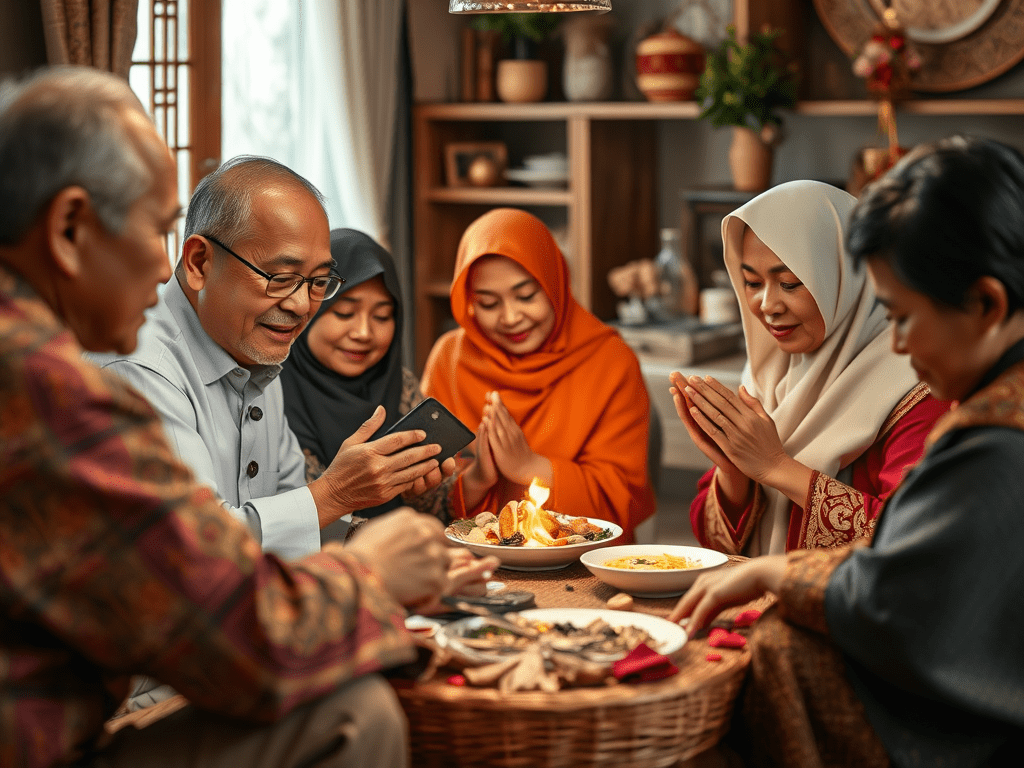
- Here are a few of my favorite family traditions that we, as family members, often observe, whether occasionally or consistently. The first involves the clothing worn during prayer, especially in Islam. Some of us still use “sarung tenun,” a Malay term, during daily prayers in Islamic tradition. This item is significant for maintaining the validity of the prayer, particularly when suitable clothing is lacking. Additionally, this simple tradition is complemented by other garments, such as “baju melayu,” worn during Eidul Fitri celebrations, consistently acknowledged at such events. This practice maintains a tradition of some family members donning “sarung tenun” as supplementary clothing and attire.
- The last tradition I wish to highlight is the food culture prevalent in my country. This dish, well-known to many, is regarded as the national food of “nasi lemak.” This coconut rice derives its name in English due to its preparation with old coconuts found in tropical regions like Malaysia. Typically, this dish is prepared on weekends, and many people partake in it, especially as it can be freely shared at mosques. My family often serves this dish during special occasions, such as business days, with my mother having the recipe to prepare it at home. One notable ingredient is Indian mackerel fish, which is fried and paired with this dish. While other ingredients can be included, many do not use Indian mackerel or do so sparingly, which is why I mention it here.
- In conclusion, these are some of the few family traditions frequently observed by those living here, which we, as a community, share for our livelihood. These traditions are valued by local inhabitants as they foster a cultural identity within society. For instance, many individuals grow and harvest coconuts to be converted into food, which is recognized as a staple. This illustrates how commonplace foods are served by family members within society. I plan to adhere to these traditions, following them likely until old age. Insyallah, please share your thoughts in the comment section.
The Importance of Traditions in Family Life
Discover more from DuRound Sanctum Studio
Subscribe to get the latest posts sent to your email.
 DuRound Sanctum Studio
Leave a comment